Industry Guides
Micro Markets for Long Island Offices and Facilities
Published
Long Island's professional, scientific and technical services industry grew from 71,800 jobs in 2020 to 77,800 in 2025, according to the New York State Department of Labor's 2025 Significant Industries report for Long Island (opens in a new tab). The same report notes that some financial advisory firms opened satellite offices on the Island to serve New York City clients from closer to home.
Many of those offices sit in suburban office parks where lunch means getting in the car. A micro market puts a small convenience store inside the building instead. Here's how one works and when it's the right fit.
What is a micro market?
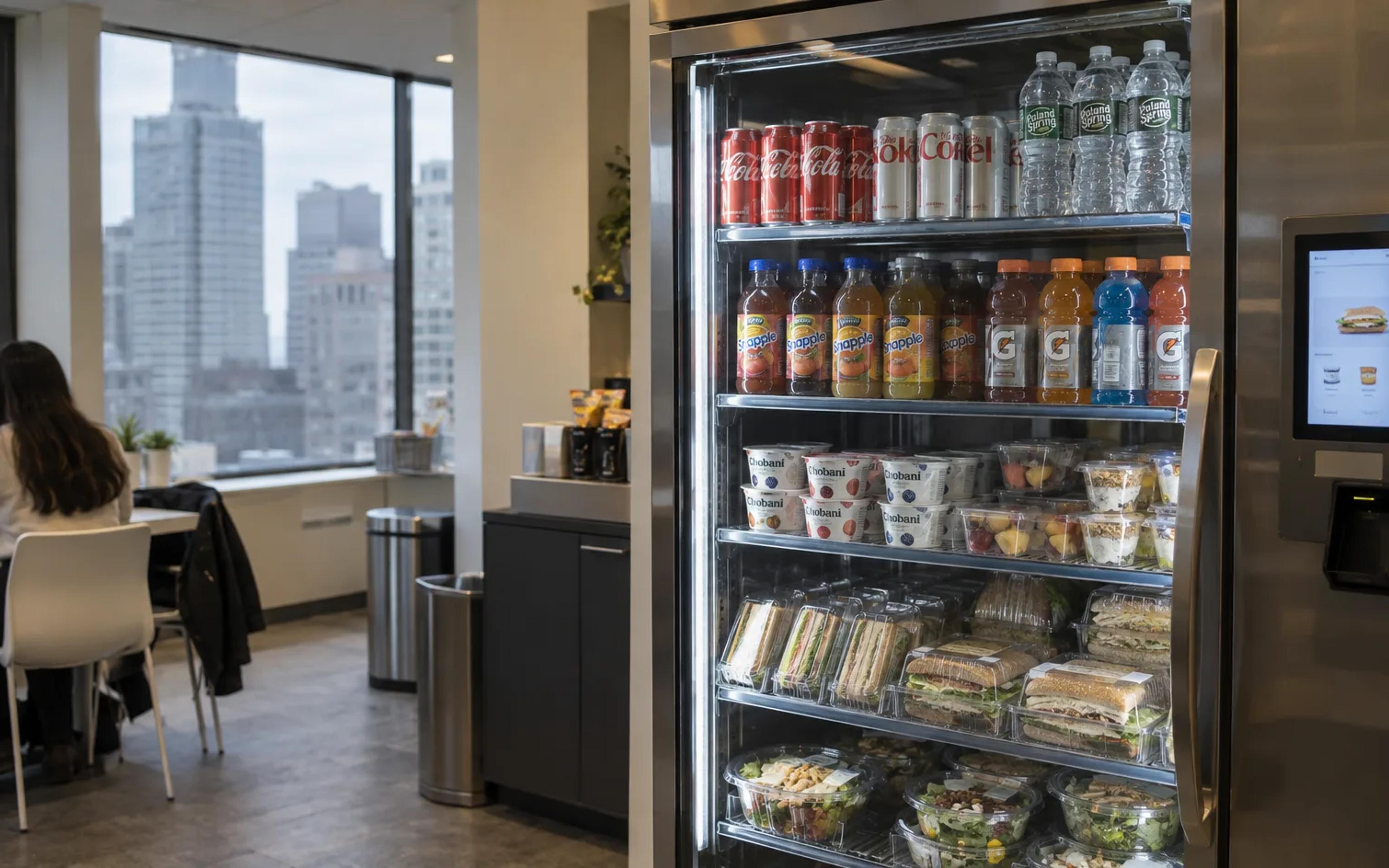
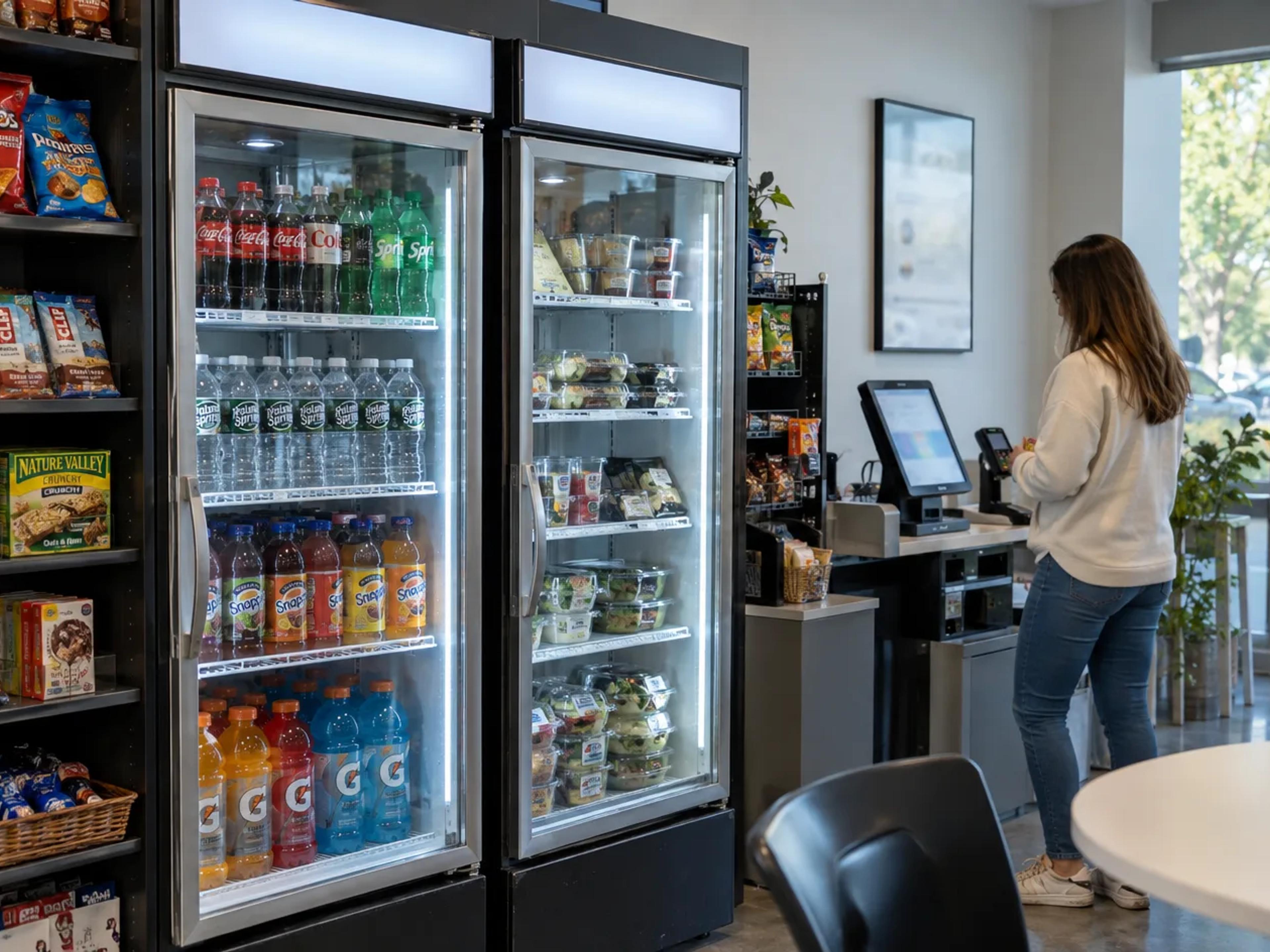
A micro market is a self-service store inside your workplace. Open shelves hold snacks, glass-door coolers hold drinks and fresh food, and a self-checkout kiosk handles payment. Employees pick up what they want, scan it at the kiosk and pay, usually by card or phone.
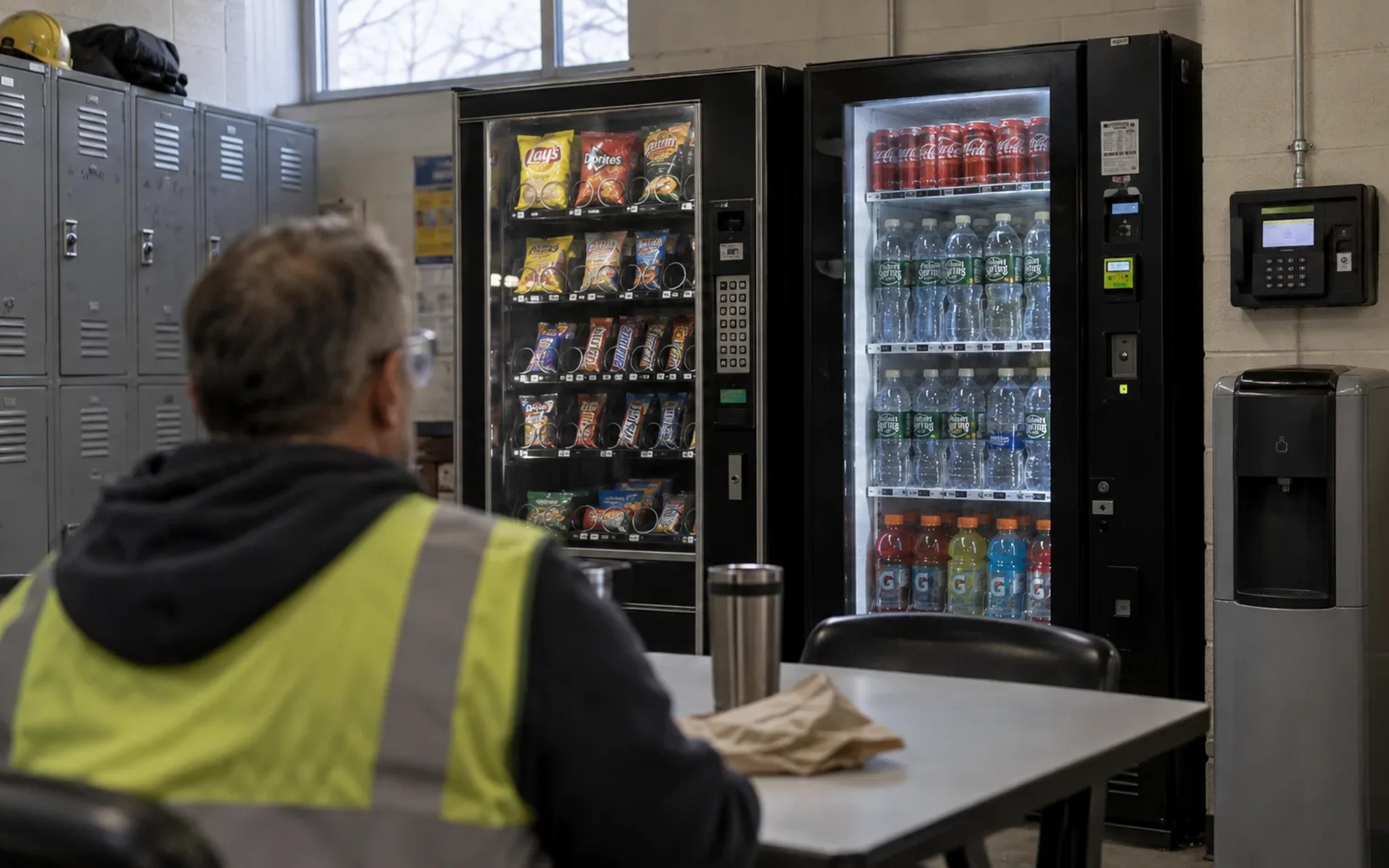
Compared with a vending machine, people can pick up a product, read the label and see far more choices at once. Fresh meals, salads and fruit fit naturally on cooler shelves.
How much space and power does a micro market need?
Size depends on how many shelves and coolers you want. A small market can be one wall of shelving and a couple of coolers. A larger one can fill a dedicated room.
Power and connectivity are the details that slow installs down, so raise them early. Ask the provider how many outlets the coolers need, whether any equipment needs its own circuit, and whether the kiosk connects through your network or its own cellular service.
Placement matters for accessibility too. The U.S. Access Board's guide to the ADA Standards (opens in a new tab) gives 15 to 48 inches as the unobstructed reach range for operable parts. That range is a useful benchmark when you decide where the kiosk screen, card reader and cooler handles go.
Keeping fresh food safe
Fresh food is the main reason many sites choose a micro market, and it needs cold, steady storage. The FDA's guidance on refrigerator temperatures (opens in a new tab) says to keep refrigerated food at 40°F or below and warns that at room temperature, bacteria that cause foodborne sickness can double every 20 minutes.
Before you sign, ask who supplies the fresh food, how often it's checked for dates, and how the coolers are monitored overnight and on weekends.
Security in an open market
A micro market runs on an honor system backed by deterrents. Common measures include a camera over the kiosk, locking cabinets for higher-value items, and a location inside the secure part of the building where only employees go.
That last point shapes where a market can work. A lobby open to visitors or a shared hallway in a multi-tenant building is usually a better spot for a locked machine. Ask any provider what security comes with the market and how they handle shrink if it becomes a problem.
When a micro market beats vending
A micro market tends to make sense when:
- Enough people buy every day to keep fresh food moving before it expires.
- You have a breakroom or corner that's employee-only.
- Your team wants real meals and more variety than a machine can hold.
- People work long or early hours and the nearest food is a drive away.
If your space is small, open to the public or lightly used, a smart vending cooler can still offer fresh food behind a locked door. Many Long Island facilities use both, with a market in the main breakroom and a machine in a second building or on another floor.
Questions to ask a micro market provider
- What headcount does our site need for a market to make sense?
- Is there any cost to us for equipment, installation or service?
- Who supplies the fresh food, and how often is it rotated?
- Which payment methods does the kiosk accept, and can our company subsidize purchases?
- What security comes with the market?
- How often will you restock, and how fast do you respond if the kiosk or a cooler goes down?
Micro markets on Long Island and in New York City
My 3 Sons Vending is a family-owned company based in New Hyde Park that has served New York businesses for more than 30 years, with routes across Nassau, Suffolk and all five boroughs. Learn more about our micro markets, or request a free breakroom assessment and we'll look at your space and tell you honestly whether a market or a machine is the better fit.